
Stop scaling the same movement
The workout reaches the rig and you have to change the skill again.
Understand which part of the skill to work on and ask which progression suits your starting point.
NQ GYMNASTICSNext time you jump up to the bar, have a plan. NQ Gymnastics brings eight skills together with Eric Gallart’s teaching, so you can understand the movement and know what to practise next.
Bar muscle-up. From swing to support.
Watching another demonstration helps. Understanding how to apply it to your own movement is the next step. NQ Gymnastics brings together Eric’s teaching, a practice pathway and analysis of your videos.
Not everyone trains for the same reason. Start with yours.
The workout reaches the rig and you have to change the skill again.
Understand which part of the skill to work on and ask which progression suits your starting point.
NQ GYMNASTICSYou can do a single rep. Linking them in a workout is a different challenge.
Practise with intent: recognise the rhythm, observe the return and prepare the next attempt.
NQ GYMNASTICSRings and handstands appeal to you, but you don’t know where to begin.
Set a personal training goal and check the requirements before choosing your task.
NQ GYMNASTICSFrom building the swing to getting over the bar or moving on your hands. Find your starting point and understand what comes next.
Connect the swing, foot lift and return as you work on linking reps.
Swing · lift · returnUnderstand swing, drive, pull and return.
Coordination · pull · returnExplore the circular path and continuity; check the prerequisites first.
Path · rhythm · continuityCoordinate the swing and pull to bring your chest towards the bar.
Drive · height · contactConnect swing, pull and transition into support above the bar.
Pull · transition · supportExplore grip, pull, transition and support on the rings.
Grip · transition · supportWork on inverted support and the sequence of lowering and pressing.
Position · range · pressPractise balance, support and weight transfer to move on your hands.
Balance · support · travelEight skills connected by a way of learning: understand, practise and observe. Your starting point matters more than a universal timetable.
Swing, coordination, pull and transition. Understand what you are trying to learn in each phase.
Grip, pull, transition and support. Understand the whole skill and the parts that make it up.
Support, balance, pressing and travel. Progress can also mean more control.
An explanation and an objective for each skill, instead of jumping between disconnected tutorials.
Video lets you revisit a phase and ask your coach more useful questions.
Revisit the teaching, choose one priority and compare one attempt with the next.
The first edition is in preparation. Content, requirements, language and analysis availability are confirmed before purchase.
Video to see the rhythm. Illustrations to pause on what matters. Eric’s explanations to guide what you practise next.
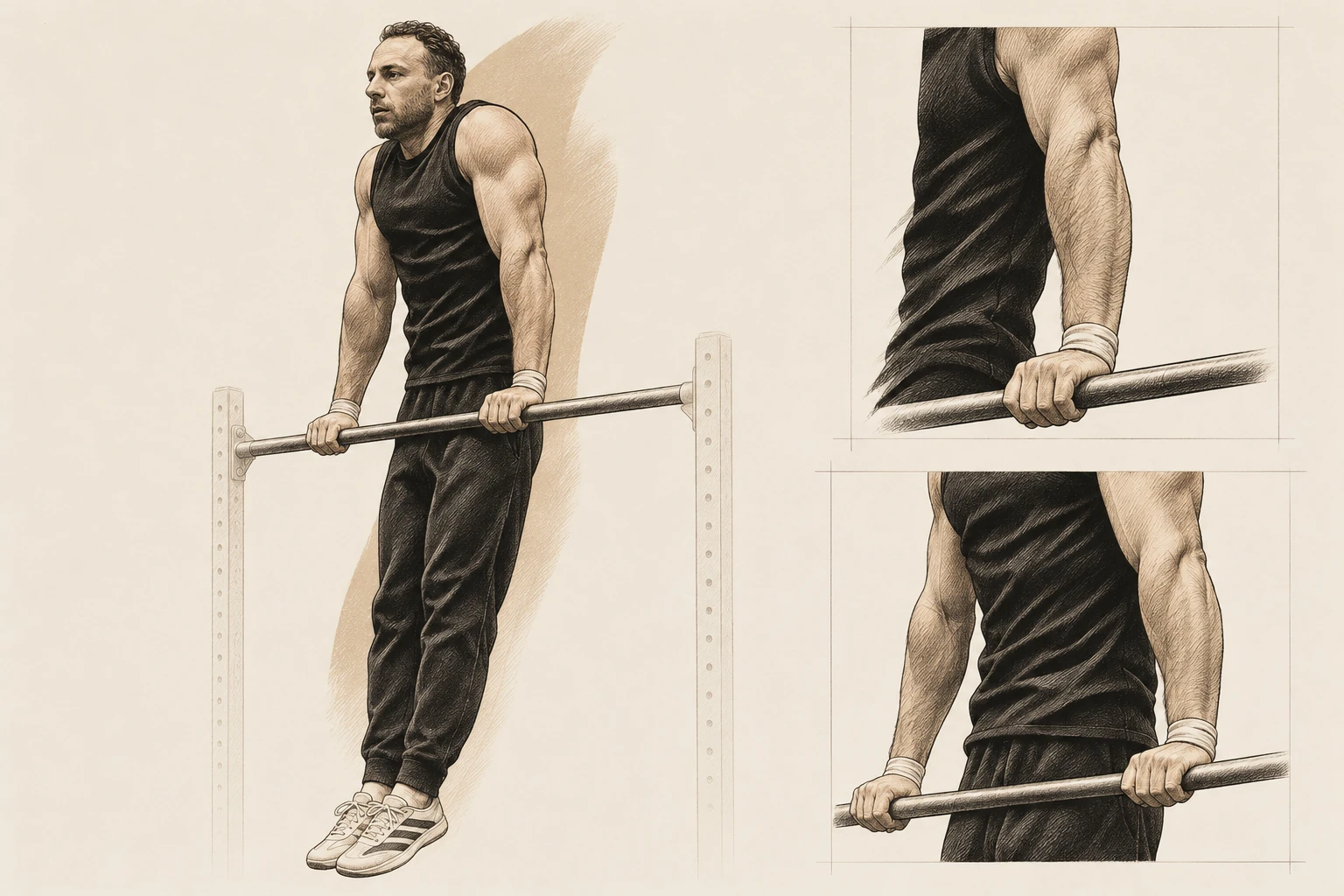
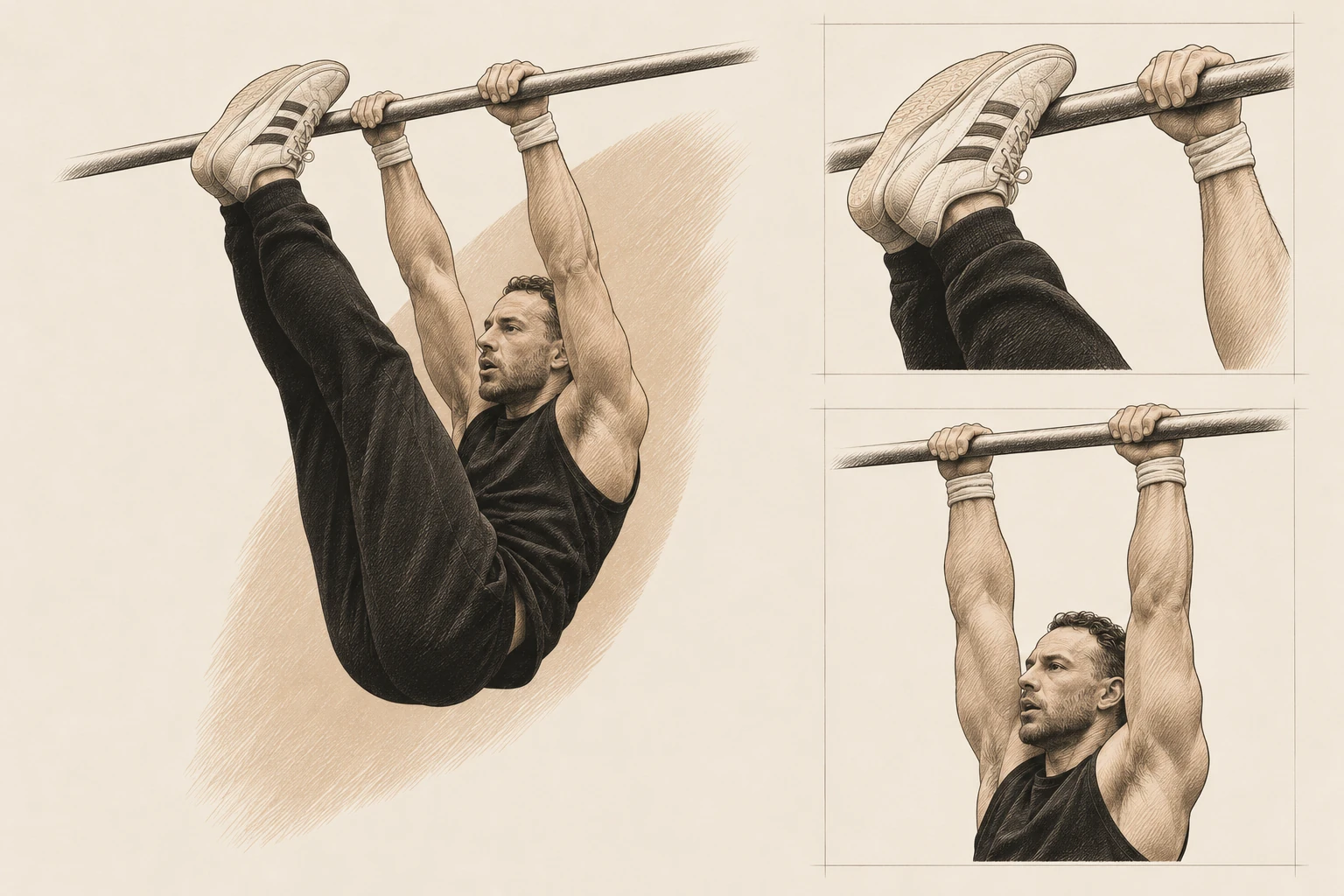
Course illustration samples based on real footage. Technical content awaiting Eric’s review.
Your video and a reference in the same frame. The analysis helps you focus on one detail and try it in your next attempt.
How the feet rise and how the return is prepared.
Focus your next attempt on one clear cue.
Record yourself again and compare the detail you worked on.
Movement analysis and Phantom development preview. Illustrative reference awaiting technical review; scope and availability confirmed before purchase.
Eric’s teaching. Technology to see your movement more clearly.
On your phone or computer. Learn, record and return to the next attempt in one pathway.
Revisit the teaching and choose the skill you want to work on.
Use your browser camera or upload a recording.
Compare your movement with the Phantom visual reference.
Spoken feedback in Eric’s voice and your language to guide the next practice.
Planned first-edition experience. Features, languages and analysis availability will be confirmed before purchase.
Eric explains what to look for, how to recognise it and where to begin.
Work on the part of the movement that matches your starting point.
Record your attempt, review the cue and compare it with the next one.
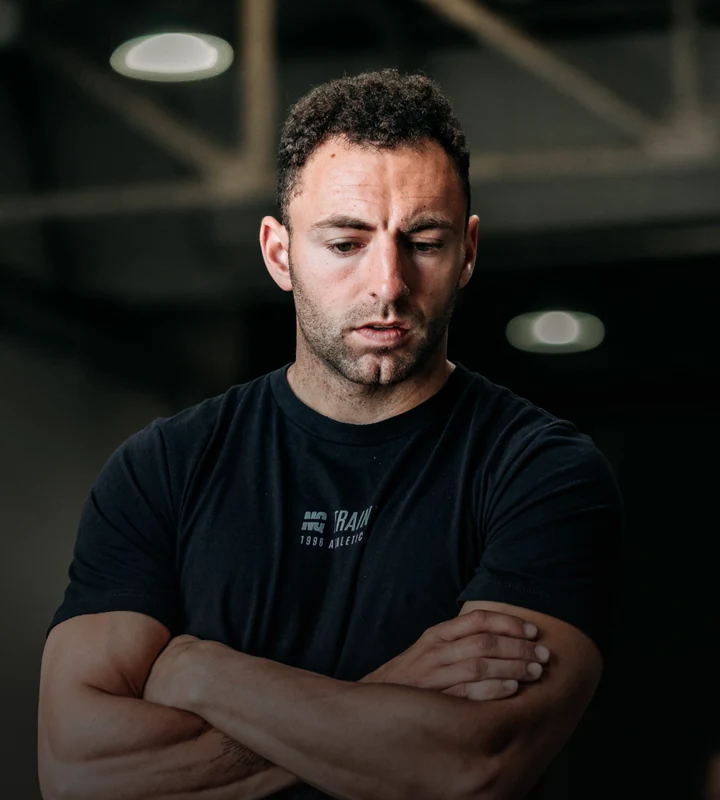 ERIC GALLART / NQ
Head Coach & Gymnastics Expert · NQ Training
Ten years of CrossFit, brought into a plan for understanding your work on the bar, rings and handstands. Eric Gallart brings experience from the box, explanations and progressions together so every practice has a purpose.
Your starting point matters. Progressions and requirements for each skill are confirmed before access.
Teaching, practice and a way to observe your movement. All in one pathway.
First edition · request access
When you request access, NQ confirms the start date, language and pack terms before you buy.
No. The course is planned around progressions; share your experience so NQ can confirm the requirements.
No. You may work on a skill for a WOD, body control or a sporting goal.
The reference and analysis are in development. Their scope and availability need to be confirmed before purchase.
Personal review of each submission is not included unless NQ explicitly confirms it.
The first edition is in preparation. Ask about the start date and terms.
Tell NQ your preferred language; availability of lessons and materials will be confirmed.
 NQ / FIELD NOTESYOUR FIRST
Before chasing the rep, understand your starting point. Eight skills, questions to choose your next goal and a worksheet to give your practice a purpose.
NQ / 01You get your feet to the bar, come down and suddenly the next rep feels miles away. You are swinging, but you are no longer sure when to start. Getting one repetition and linking several are related challenges, but they are not quite the same. First you need to reach the target; then you need to organise the return so you can begin again.
Read the guide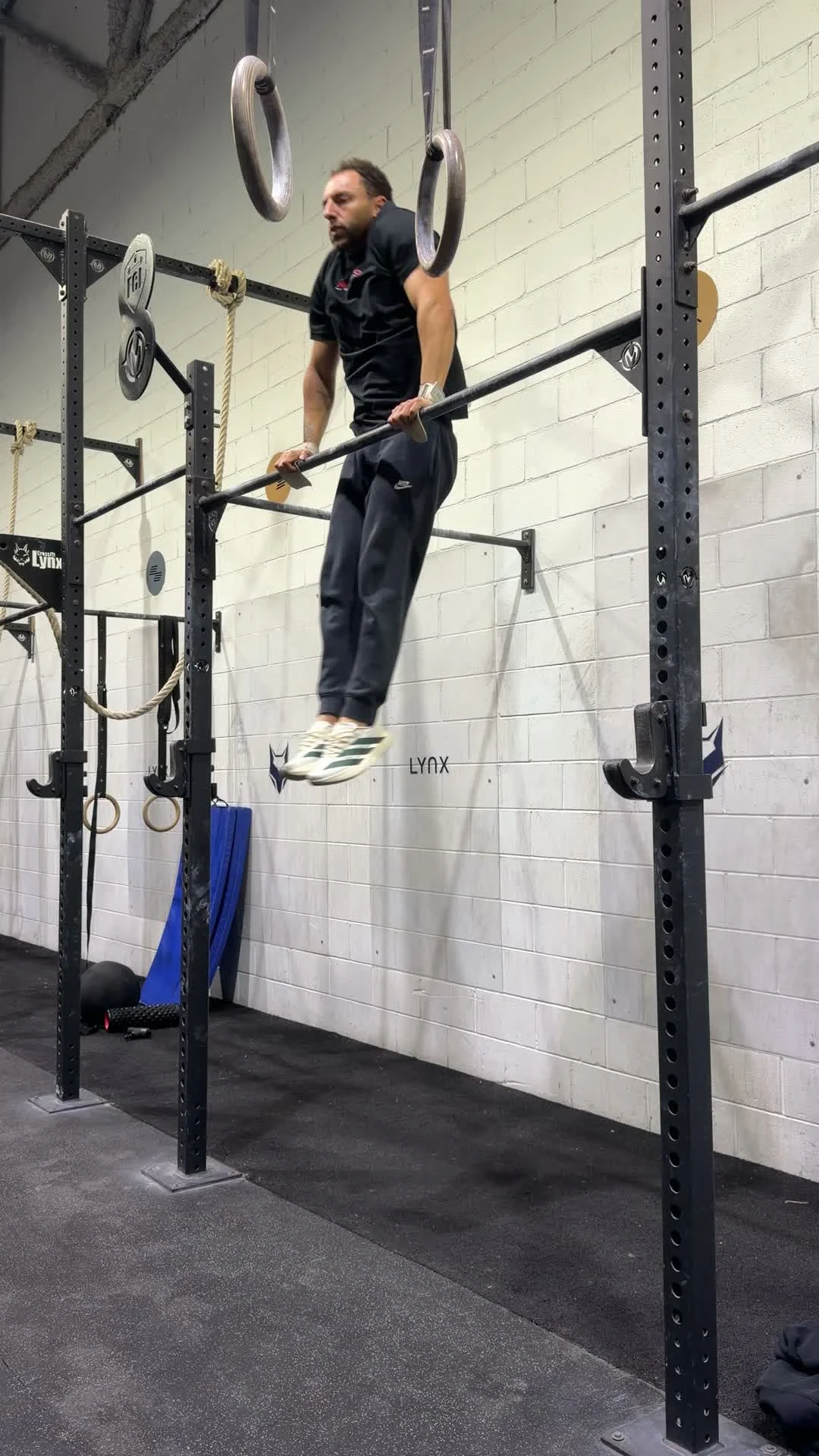 NQ / 02
You stand under the bar, build a swing, pull and end up underneath it again. From the outside, it can look as though all you need is a harder pull. But the bar muscle-up is not simply a higher pull-up: it connects a swing, a pull, a transition and support above the bar. When one part is unclear, repeating the entire attempt can make it harder to understand what to practise.
Read the guideNQ / 03Being upside down changes how you orient yourself. Your hands become your base, your shoulders work in a different position and suddenly even staying still can take all your attention. Before thinking about handstand push-up reps or metres walked on your hands, it is worth asking which part of the position you can control now.
Read the guideFirst, bar, rings and handstands. Later, new pathways for weightlifting, HYROX and other disciplines.
Join the first edition of NQ Gymnastics.